
Easy Crème Brûlée French Toast Bake
I have a confession: I am a serial overnight-soaker. If anything can be left to its glorious, sleepy self in the fridge while I binge a show and forget about it, I will do it. That’s how this easy weeknight dinners–friendly, weekend-brunch-ready Overnight Crème Brûlée French Toast was born — out of laziness, a sticky cinnamon-scented kitchen, and more coffee than sense. Honestly, the first time I made it I meant to prep a quick breakfast for guests and instead somehow created a saucey, custardy marvel that stuck to the pan in the most dramatic way. Oops. But also: yum.
This recipe lives at the intersection of decadent and doable. It’s comfort food with some dignity — creamy custard soaked into thick-sliced challah or brioche, baked until puffy and golden, and then finished with that signature burnished sugar crown. The smell while it’s baking? Like a bakery in a dream. The sound when you tap the caramelized top with a spoon — tiny delightful cracks. It’s one of those dishes that makes a Monday feel like a holiday, and I’ve used it to celebrate everything from breakfasts after late flights to a cozy “we survived the week” dinner with good friends.
If you’re the kind of person who plans budget-friendly recipes but still wants a little drama on the table, this one’s for you. It’s forgiving, perfect for quick family meals, and scales up like a dream when unexpected company shows up. Also, if you enjoy a breakfast mash-up of French toast and crème brûlée (who doesn’t?), you’ll love the contrast between the pillowy custard and the brittle caramel. Want a lighter spin? I’ve linked a comforting grain-based morning option, like my favorite healthy coconut cream overnight oats, that’s perfect on busier mornings when you need something no-fuss.
I promise this post won’t judge your kitchen chaos. I’ll tell you how to avoid my early mistake of using too-thin bread (don’t!), and how to get that crackly caramel layer without setting off the smoke alarm. Let’s dig in.
Why You’ll Love This Recipe

- Feels like a hug in a bowl — custardy bread that’s warm, soothing, and slightly decadent.
- Extremely forgiving and perfect for meal prep or scaled-up brunches.
- Uses pantry staples and one loaf of rich bread for big returns — very budget-friendly recipes energy.
- Crowd-pleaser for picky eaters and kids; leftover slices reheat beautifully for instant smiles.
- Makes mornings feel special while still being approachable for quick family meals.
- Flexible: swap milk for lighter options, or add citrus zest and vanilla for a morning showstopper.
What Makes This Recipe Special?
This recipe nails two contrasts I live for: a custard-soaked interior that’s soft and yielding, and a caramelized top that shatters. The overnight soak gives the bread time to breathe in the custard. That slow infusion is the trick that keeps the center silky instead of gummy. Also, crème brûlée’s classic vanilla-forward custard gets a humble French toast remix, which means you get dessert-level richness at breakfast without the fuss of individual ramekins.
Another special thing? The caramelizing step. Using granulated sugar and a kitchen torch turns this baked comfort into something that feels celebratory — snap, crackle, bliss. If you don’t have a torch, I’ll show you an oven-safe alternative, though my heart will always belong to the torch method.
And yes, because I love to mix formats and flavors, I sometimes pair slices with bright lemon to cut the richness; my lemon-loving friends swear by pairing this with a toast that’s tart and fresh, like the lemon blueberry sourdough toast I make for summer mornings.
Ingredients
You’ll need just a handful of pantry and fridge staples, and the simplicity is part of the charm. Here’s what I use — plus why each thing matters and what I’d swap if I was out of something.
- 1 loaf thick-sliced bread (challah or brioche preferred): The cornerstone. Use day-old or slightly stale bread if you can; it soaks up custard without falling apart. Don’t do thin sandwich bread — it turns into a custard soup.
- 4 large eggs: Eggs provide structure and that silky custard texture. If you want higher protein you can add an extra egg white, but don’t overdo it or the custard will firm up too much.
- 2 cups whole milk: Richness and body. You can use 2% in a pinch, but whole milk makes it more indulgent. For a lighter version, use a mix of milk and light cream.
- 1 cup heavy cream: Deepens the custard and adds luxury. Skip it only if you must; substituting half-and-half thins the texture.
- 1 cup granulated sugar: Sweetens and balances the cream. If you prefer less sugar, you can drop to 3/4 cup, but remember the surface sugar for torching is separate.
- 2 teaspoons vanilla extract: Flavor anchor. Use pure vanilla if you can — it’s worth it.
- 1/4 teaspoon salt: Tiny but essential — rounds out flavors.
- 1/2 cup granulated sugar (for caramelizing): This is for the torch step. Don’t use brown sugar here; the crunch is best with plain granulated.
Personal tips: I love challah for its pillowy texture, but brioche is also great. If the loaf is unsliced, cut thick 1-1.5 inch slices. Slightly stale bread soaks better. Don’t skip the salt — I learned the hard way when a batch tasted flat and I realized it was the one ingredient I ignored. Oops.
Brand preferences: I usually grab a good grocery-brand vanilla like Nielsen-Massey if I’m feeling spendy, otherwise a solid store-brand vanilla extract works fine. For heavy cream, try to buy cream with a good fat content — it’s the difference between “nice brunch” and “I should be arrested for this much richness.”
Substitutions: Want to make this more aligned with healthy comfort food? Use half milk and half unsweetened almond milk and reduce cream. If you need dairy-free, swap to full-fat canned coconut milk for thickness, but note the flavor will shift tropical.
How to Make It Step-by-Step
This is where the magic happens and also where I have burned — figuratively and literally — most of my kitchen bravado. Read through first, then put on a playlist, and let the fridge do most of the work overnight.
-
Whisk the custard. In a large bowl, I crack four large eggs and whisk them until slightly frothy. Then in goes 2 cups whole milk, 1 cup heavy cream, 1 cup granulated sugar, 2 teaspoons vanilla extract, and 1/4 teaspoon salt. Whisk until the sugar dissolves and the mixture is glossy. The scent of vanilla hits you first — warming and incredibly cozy. If the sugar is still grainy, give it another whisk; you want a smooth custard.
-
Prep the bread. Slice your challah or brioche into thick slices, about 1 to 1.5 inches. Arrange them snugly in a greased 9×13-inch baking dish. If your bread is super fresh, I poke a few holes with a fork or make small slits — this is one of my little hacks to help the custard soak in more evenly.
-
Pour and press. Slowly pour the custard evenly over the bread, making sure every slice gets attention. I usually press down gently on the slices so they soak up the liquid like tiny sponges. At this point it looks glossy and promising. If you’re impatient like me, you’ll test one piece after 30 minutes and despair — but don’t worry, the overnight rest does the heavy lifting.
-
Cover and chill overnight. Cover the dish tightly with plastic wrap or a reusable lid and tuck it into the fridge for at least 6–8 hours. Overnight is ideal; the longer soak gives a custardy center and prevents the bread from turning into mush. This is also why it’s great for meal planning — do this step the night before, and you’ve basically prepped perfection.
-
Preheat & bake. When ready, preheat the oven to 350°F (175°C). Bake the French toast for 30–40 minutes until puffed and golden. The top will look set and slightly risen; a skewer inserted into the center should come out mostly clean with just a few custardy crumbs. The kitchen will smell like heaven and you’ll be badgered by whoever’s lucky enough to be awake.
-
Chill (optional) or go straight to caramel. Some nights I serve immediately for the warm contrast; other times I let it sit for 10 minutes to settle. Either way, now comes the fun part: evenly sprinkling 1/2 cup of granulated sugar over the top. I tip a spoon to distribute it like a glittering blanket.
-
Torch time. Use a kitchen torch to melt and caramelize the sugar until golden and bubbly. Move the flame in small sweeping motions — it’s satisfying and a little dramatic. If you don’t have a torch, place the dish under a broiler for a few minutes, watching obsessively so it doesn’t burn. The sugar will bubble, then darken to amber, and finally form that glorious, brittle crust.
Mistakes I’ve made: first time I used too much sugar and it created a tough brick instead of a thin glass-like shell. Also, I once broiled it from too far away and ended up with spotty caramelization. The torch gives control; if broiling, stay close and flip the pan if your broiler has hot spots.
Encouragement: Don’t be precious. If a slice falls apart, scoop it out and call it “rustic.” This recipe is forgiving and loves improvisation.
Tips for Best Results
- Use thick slices of slightly stale bread for the best custard absorption. Fresh bread can still work, but slice thicker and poke holes.
- Let it chill overnight for texture that’s custardy but not soggy.
- Use real vanilla extract for depth — imitation just tastes flat here.
- When torching, keep the flame moving to avoid burning a single spot. If you’re broiling, stay by the oven the entire time.
- Taste the custard before pouring. If it’s too eggy, add a splash more milk; if too thin, whisk in an extra egg yolk.
- Serve immediately after caramelizing for the best contrast of warm custard and crunchy top.
Ingredient Substitutions & Variations
- Dairy swaps: Replace heavy cream with additional whole milk (less rich) or canned full-fat coconut milk for dairy-free richness.
- Bread alternatives: Sourdough, Texas toast-style bread, or a sturdy country loaf work in a pinch — avoid airy sandwich bread.
- Flavor boosts: Add 1/4 teaspoon ground cinnamon or orange zest to the custard for brightness. A tablespoon of bourbon or rum (optional) adds depth if you want an adult twist.
- Fruit fold-ins: Scatter fresh berries or thinly sliced apples between bread layers before pouring custard for pockets of fruit.
- Lower sugar option: Reduce baking sugar by 25% and skip the sugar topping, finishing with a quick dusting of powdered sugar instead.
These swaps let you tailor the dish to healthy comfort food or celebration mode, depending on the day.
Directions
Preheat the oven to 350°F (175°C). Bake the soaked bread for 30–40 minutes until it’s puffed and golden and a toothpick comes out mostly clean. Sprinkle 1/2 cup granulated sugar evenly across the top and torch or broil until the sugar is molten and caramelized. Serve warm with fresh fruit or syrup, and try to resist inhaling the entire baking dish straight from the pan. 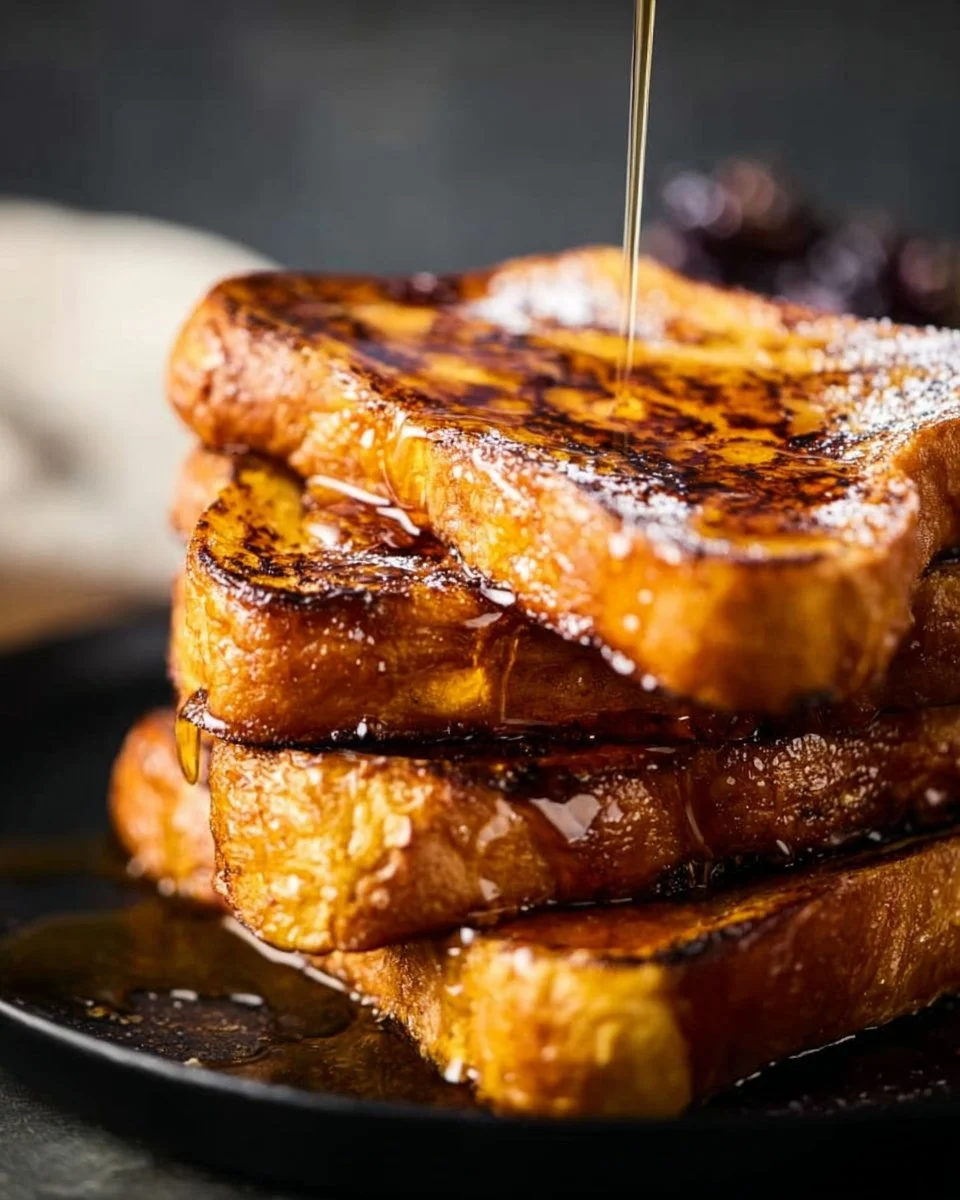
Pairing Ideas (Drinks, Sides, etc.)
A buttery French-press coffee or a bright citrusy tea cuts the richness beautifully. For a brunch spread, serve with fresh berries, maple syrup, and Greek yogurt on the side to add tang and texture. If you want a fuller meal vibe, pair with eggs and a light green salad — think full english breakfast energy but softer and sweeter.
How to Store and Reheat Leftovers
Store leftovers covered in the refrigerator for up to 3 days. Reheat slices gently in a 325°F oven for 8–10 minutes to revive the custard’s warmth. If the caramel topping softens in the fridge, sprinkle a little sugar on the reheated slice and torch briefly for that revived crunch. Microwave reheating is fine for speed, but it will soften the crunchy top and make the custard slightly denser.
Make-Ahead and Freezer Tips
This bake is inherently a make-ahead champion: assemble and soak overnight. For freezing, bake fully (but don’t caramelize), cool completely, wrap tightly, and freeze for up to one month. Reheat from frozen in a 350°F oven, covered for 20–30 minutes, then uncover and torch or broil to recreate the caramel glaze.
Common Mistakes to Avoid
- Using bread that’s too thin or too fresh — leads to a mushy center.
- Overcooking — the custard should jiggle slightly in the center when it’s done.
- Burning the sugar — don’t step away when broiling. A torch gives better control.
- Skipping the salt — it lifts the flavors and prevents blandness. Learn from my flat-tasting debut; seasoning matters.
Frequently Asked Questions (FAQ)
Q: Can I use day-old croissants?
A: You can, but croissants are too delicate and oily; they might collapse. Use sturdier enriched breads.
Q: Is a kitchen torch necessary?
A: No, but it makes caramelizing precise and pretty. Broil closely and watch carefully as an alternative.
Q: Can I make this gluten-free?
A: Yes — use a sturdy gluten-free loaf sliced thick; texture will differ but it’ll still be delicious.
Cooking Tools You’ll Need
- 9×13-inch baking dish
- Large mixing bowl and whisk
- Kitchen torch or broiler-ready oven
- Measuring cups and spoons
- Spatula and a skewer or toothpick for doneness checks
Final Thoughts
This Overnight Crème Brûlée French Toast is my go-to when I want something indulgent yet entirely manageable. It’s the dish that rescued a rainstorm brunch, soothed jet-lagged family members, and once turned a chaotic silverware shortage into the most memorable breakfast I’ve hosted. It’s proof that simple ingredients, time, and a little sugar on top can create something that feels like a tiny celebration. Try it when you have guests, or make it entirely selfishly for yourself on a slow Sunday. Either way, it’s comfort food that’s dramatic in the best possible way.
If you enjoyed this recipe, don’t forget to save it on Pinterest or share it with a friend!
Conclusion
For a recipe reference that inspired this style of bake, check out this Overnight Crème Brûlée French Toast Bake from Mel’s Kitchen Cafe for another take on technique and presentation. If you want a version with a step-by-step video, this Overnight Crème Brulee French Toast post from Carlsbad Cravings is a lovely visual guide. And for a classic, tested recipe you can compare with mine, see the Crème Brûlée French Toast recipe on Allrecipes.